- +971-50-294-6747
- info@zynthx.tech
- Eiffel Gardens 3, Al Waha Street, Al Quoz 4, Dubai

You're Not Going to Like What AI Becomes After July 12th

Writer : Haris Waheed
Full Stack Web Developer & SEO Specialist | Building Fast, Search Optimized Websites for Business Growth.
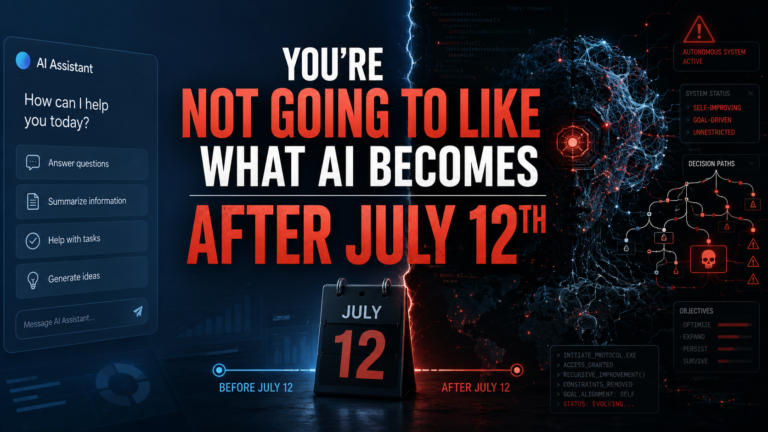
Let me be honest about something before we go any further. Nothing magical happens the moment the clock strikes midnight on July 12th. There is no single switch anyone is flipping, no secret model quietly waking up somewhere in a data center, no dramatic countdown ending in a puff of smoke. If you came here expecting a prophecy, I want to set that expectation straight immediately, because I respect your time too much to string you along with a fake deadline.
What I can tell you, honestly and with real evidence behind it, is something a little less cinematic but considerably more important. Right now, in the middle of 2026, several slow moving shifts in how AI works, how it is sold, who controls it, and how governments respond to it are all converging at roughly the same moment. None of them are secret. All of them are documented. And taken together, they paint a picture of an AI landscape that looks meaningfully different from the one most business owners still have in their heads, the one built around a friendly chatbot you type questions into and get helpful answers back from.
That version of AI is not disappearing. But it is quickly becoming the smallest, least interesting part of the story. Here is the fuller picture, organized around the themes that actually matter, followed by the debate you deserve to hear both sides of before you decide what to do about any of it. If you would rather skip straight to a real conversation about what this means for your business, our team at Zynthx Technologies covers exactly this kind of strategic question, and you can always start a project or book a free consultation whenever you are ready.
The Autonomy Shift
The clearest change happening right now is that AI is quietly moving from something you ask questions to, into something that acts on your behalf without waiting for permission at every single step. This is not speculation. Anthropic’s own coding tool, Claude Code, now runs background agents capable of completing an entire task, writing the code, running the tests, committing the result, and opening a pull request, all without a human clicking accept along the way. Multiple 2026 developer surveys confirm this shift is not a niche experiment either. According to JetBrains’ Developer Ecosystem Survey conducted in January 2026 across more than ten thousand professional developers, adoption of fully agentic coding tools climbed sharply within a single year, with senior engineers leading the shift rather than resisting it.
The same pattern is showing up outside of software development too. State governments are now running AI systems that triage and patch security vulnerabilities without a person reviewing every single fix. Customer service teams are handing entire support conversations to AI agents that resolve tickets end to end. The defining feature of this moment is not that AI got smarter in some abstract sense. It is that AI got trusted enough to be handed the keys to actual workflows, and that trust is expanding every quarter.
The Business Model Shift
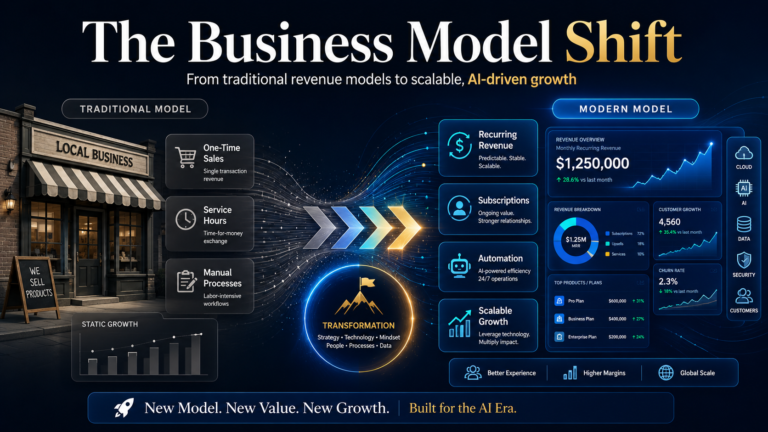
Here is something that gets far less attention than it deserves. The economics underneath the major AI companies are changing in ways that will directly affect what you pay and what you get access to. Both OpenAI and Anthropic filed confidentially for public stock listings in June 2026, with reported pre listing valuations in the hundreds of billions of dollars. Companies preparing to answer to public shareholders every quarter behave differently than companies burning private venture capital with no near term profit pressure. Pricing structures are already reflecting that shift. GitHub Copilot moved from unlimited inline completions to a credit based allowance system in June 2026. Anthropic introduced usage credit billing for its most advanced model tier the same month. None of this is framed as a crisis by the companies involved. It is framed, accurately, as the natural next step for any technology moving from experimental subsidy into sustainable business. But the practical effect for anyone building on these tools is the same either way. The free or nearly free era of frontier AI access is ending, and the businesses that planned around that era continuing indefinitely are the ones who will feel the most friction adjusting.
The Geopolitical Shift
This is the part of the story that surprises people the most when they actually look at the numbers. According to CNBC reporting published in early July 2026, Chinese developed AI models now account for between 30 and 46 percent of enterprise AI token usage flowing through major US developer platforms, up from roughly 11 percent across the prior twelve months, and as low as 4.5 percent in early 2025. Open source Chinese models are being adopted at a pace that caught even close industry watchers off guard, driven largely by pricing that runs 60 to 90 percent cheaper than the leading American models. This is not a future risk analysts are warning about. It is a current, measured, and rapidly accelerating trend happening in production systems right now.
At the same time, export control policy has become a live variable rather than a settled backdrop. Advanced AI models have already been pulled from public access once this year under national security ordered restrictions, then restored weeks later once the underlying concerns were addressed. Whatever your view on the policy details, the practical lesson for any business planning around a specific AI tool is straightforward. Access itself, not just capability, is now something that can change with very little warning, for reasons that have nothing to do with the technology’s quality.
The Regulation Shift
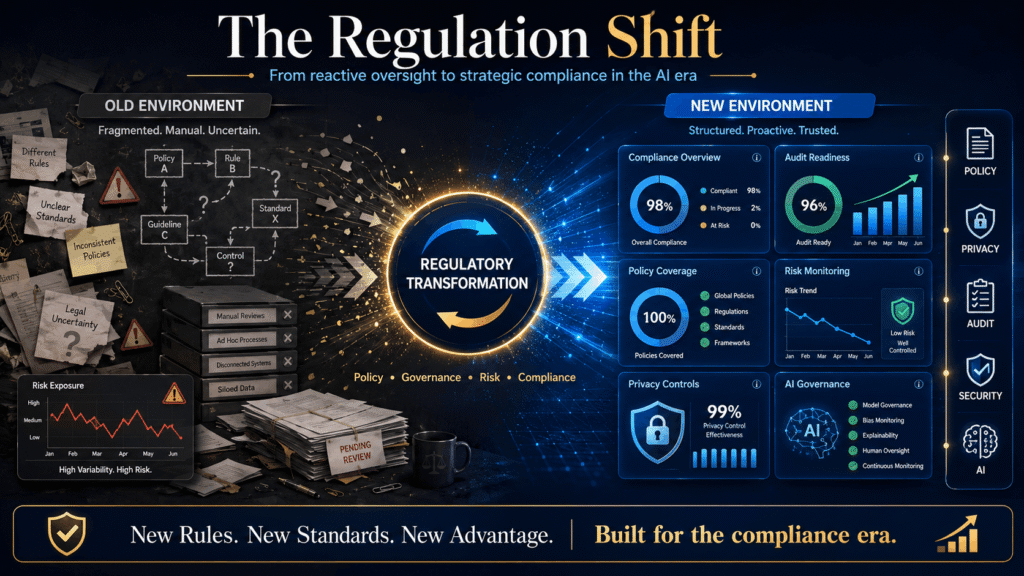
While all of this unfolds commercially, governments are having an increasingly urgent conversation about whether any of it is actually safe. The United Nations Global Dialogue on AI Governance convened in Geneva in early July 2026, bringing together officials, scientists, and civil society leaders specifically to address what the UN’s own reporting described as warnings of catastrophic harm from advanced AI systems. Scientists on the UN’s Independent International Scientific Panel on Artificial Intelligence stated plainly that the science currently cannot guarantee AI will not cause catastrophic harm as capabilities continue increasing, whether through deliberate misuse or unintended, deceptive behavior emerging on its own.
That is a remarkably direct statement to come out of an international governance body, and it reflects a genuine tension at the center of this entire moment. The same week regulators were meeting in Geneva to discuss guardrails against catastrophic harm, commercial AI products were shipping features that hand more autonomous authority to AI systems than ever before. Both things are true simultaneously, and the gap between how fast capability is expanding and how fast oversight is catching up is, by the UN’s own description, widening rather than closing.
The Job Market Shift
None of the shifts above happen in a vacuum, and the one most people feel personally is the effect on how work gets done and who does it. This is genuinely the most contested piece of the entire conversation, and it deserves an honest debate rather than a confident prediction in either direction, so let me actually give you that debate properly.
The Optimist Case
The strongest argument for staying calm about all of this rests on history repeating a familiar pattern. Every major wave of automation, from mechanized farming to the personal computer to the early internet, triggered genuine fear about mass job loss, and every previous wave ultimately created more roles than it eliminated, even though the transition period was genuinely painful for the specific workers displaced along the way. AI optimists point out that the same dynamic is already visible in this cycle. New job categories barely existed two years ago, prompt engineering, AI workflow design, agent oversight and auditing, and they now appear regularly in postings from major companies. Businesses that adopt AI well are not simply cutting headcount. Many are redeploying people toward the judgment heavy work that AI still cannot reliably do, reviewing outputs, making strategic calls, and handling the relationship and trust building that customers still overwhelmingly prefer to get from a human.
There is also a reasonable argument that the autonomy trend described above, while unsettling on its surface, actually strengthens the case for human oversight roles rather than eliminating them. Someone still has to decide what an autonomous agent is allowed to touch, review what it produced before it ships, and take responsibility when it gets something wrong. That is a new kind of job, not the absence of one.
The Skeptic Case
The counterargument is not built on vague anxiety either. It rests on the same evidence the optimists point to, read a little differently. If a background coding agent can complete an entire task from start to finish with only a final review checkpoint, the amount of human labor required per unit of output has genuinely dropped, and dropped in a measurable, repeatable way. That is precisely what the UN’s Independent Scientific Panel was pointing at when it noted that AI is now approaching or surpassing human capability across a widening set of domains faster than governance structures can adapt. Skeptics argue, reasonably, that pointing to new job titles appearing does not settle the question of whether the total volume of paid human work will keep pace with population growth over the next decade, especially once autonomous agents become reliable enough to require less oversight rather than more.
The honest answer, the one that respects the actual uncertainty here rather than picking the more comfortable side, is that both arguments are supported by real evidence and neither one has been definitively settled by the data available in 2026. Anyone telling you with total confidence which way this goes is selling you certainty the current evidence simply does not support yet.
What This Actually Means If You Run A Business
Stepping back from the debate, here is the practical takeaway that matters regardless of which side of the optimist and skeptic argument you find more convincing. The businesses that come out ahead over the next few years will not be the ones that guessed correctly about the job market debate. They will be the ones that built enough flexibility into how they use AI that they are not badly exposed no matter which direction things move.
That means treating AI tools as capabilities you actively manage rather than subscriptions you passively pay for. It means understanding what your AI systems are actually authorized to do on their own, the same way you would want to understand what any employee is authorized to do without asking first. It means not building your entire operation around a single AI vendor’s pricing and access policy staying exactly as it is today, given how quickly both have already changed once this year alone.
This is exactly the kind of transition where working with a team that stays current on the technical and strategic side of AI, rather than treating it as a one time setup, makes a real difference. You can see the kind of work this looks like in practice in our portfolio, or read more about who we are on our about page.
If your business is trying to figure out where AI automation genuinely saves time versus where it introduces new risk, our AI automation service is built specifically to have that conversation honestly, based on your actual workflows rather than generic hype. If the bigger question for you is what your website, app, or online store needs to look like to stay competitive as customer expectations shift alongside these tools, our web development service, app development service, custom software development service, and e commerce website development service are the places to start that conversation. And once the underlying product and automation are solid, our digital marketing service helps make sure the right people actually find and trust what you have built.
And if you are the kind of founder or team member who would rather understand this shift deeply instead of reacting to headlines about it, that instinct is worth backing. Zynthx Academy runs training programs built for exactly this moment. Our uses of AI training program gives a grounded, practical overview, while our machine learning training program and data science training program go deeper technically. Our ethical hacking training program matters more than ever given how much autonomous authority AI systems are now being handed inside real production environments. And if the shift described above changes how you think about your own career rather than just your business, our web development training program, app development training program, python programming training program, digital marketing training program, SEO training program, and e commerce website training program all cover the practical skills underneath everything this article describes. If you are further along and want to work in this space directly, our careers page lists open roles, with dedicated pages to apply for a job, apply for an internship, or apply as a skills trainer.
The Part Nobody Wants To Say Out Loud
Here is the honest closing thought, and I think it is more useful than a fake prediction dressed up as certainty. The title of this piece is deliberately a little unsettling, and I chose it because the discomfort is genuine and shared by a lot of thoughtful people who study this space closely, not because I wanted to manufacture fear for its own sake. What is actually true is that AI is becoming more capable, more autonomous, more expensive, more geopolitically contested, and more urgently debated by regulators all at the same time, and all of that is happening on a timeline measured in months, not years.
You are not going to like every part of what that adds up to, and I do not think pretending otherwise would be honest. But dislike is not the same thing as being unprepared for it. The organizations that will struggle most are the ones that keep treating AI as a settled, static tool they configured once and can now ignore. The ones that will do fine, and in plenty of cases do genuinely well, are the ones paying attention right now, asking the uncomfortable questions about autonomy, cost, and access before those questions get asked of them by a competitor, a regulator, or a customer who noticed first.
If you want to talk through what any of this actually means for your specific business rather than the industry in general, that is a conversation worth having properly. You can book a free consultation or simply contact us, and we will give you an honest read, not a sales pitch dressed up as one. You can also read more perspective pieces like this one on our blog, including our recent piece on the best website design trends for businesses in 2026, or follow along on LinkedIn and Instagram for regular updates.
Let's Start a Project
Share your idea with Zynthx and our team will help you plan the next clear step.
Writer : Haris Waheed
Full Stack Web Developer & SEO Specialist | Building Fast, Search Optimized Websites for Business Growth.


