
OpenAI And Netflix Are Paying Up To $775k To Hire Writers, Here Is Why

Writer : Haris Waheed
Full Stack Web Developer & SEO Specialist | Building Fast, Search Optimized Websites for Business Growth.
In Brief
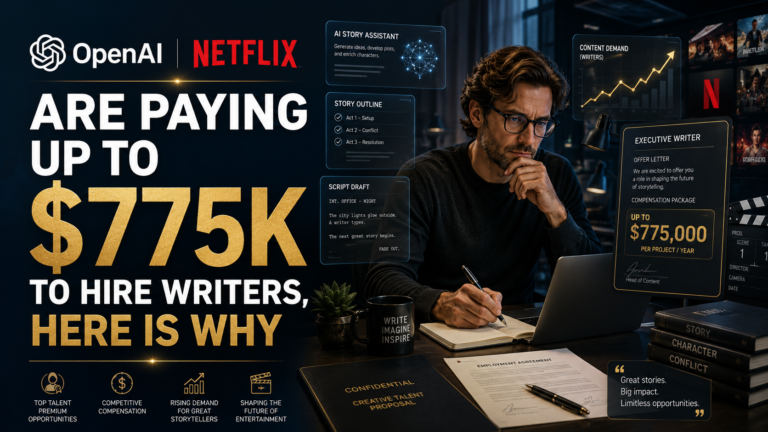
You were told that AI would kill writing as a career within a year or two. It has not happened, and the opposite is unfolding in a way that genuinely surprised a lot of people watching the industry closely. OpenAI has communications and storytelling roles listed at close to four hundred thousand dollars. Netflix recently advertised a director of product and technology communications role reaching seven hundred seventy five thousand dollars a year. Anthropic has been expanding its communications team significantly. None of these roles require a single line of code. All of them require exceptional writing, editing, and narrative judgment. The reason is not sentimental nostalgia for human creativity. It is a straightforward economic pattern, when something becomes abundant and nearly free, whatever remains genuinely scarce becomes considerably more valuable, and generative AI has made mediocre content so abundant that the ability to write something a discerning human actually wants to read has become one of the scarcest, most commercially valuable skills at exactly the companies building the AI in the first place. This article walks through the real numbers behind these hires, why the abundance and scarcity pattern explains what is happening better than any AI panic narrative, what these roles actually require day to day, and argues honestly about how durable this trend is likely to be.
Now, the full story.
You Were Lied To
In 2022, when the first wave of genuinely capable AI writing tools hit the public, the prediction was everywhere and it was blunt. Online writing as a career was finished, maybe within a year, certainly within two or three. Anyone still calling themselves a writer in 2026 was going to be competing against a machine that worked for free, never got tired, and could produce a serviceable paragraph in about two seconds.
That prediction was not entirely wrong about the tools. Generative AI did become extraordinarily capable at producing prose, fast, in 2026 it can write a passable article, a decent email, a competent product description, all in the time it takes to read this sentence. What the prediction got wrong was the conclusion, because it assumed that abundant, cheap writing would make all writing less valuable. What actually happened is closer to the opposite for a specific, genuinely important category of writing, and the evidence is sitting in plain sight, in job listings from the exact companies that built the tools everyone assumed would make this profession obsolete.
If you would rather skip straight to talking about how strong communication and content strategy actually drives business results, our team at Zynthx Technologies builds exactly this kind of work into everything we do, and you can start a project or book a free consultation any time.
The Actual Numbers
Here is what is actually happening, verified through Entrepreneur’s own reporting on the trend, which draws on original coverage from Business Insider and the Wall Street Journal. Senior communications and storytelling roles at leading AI companies now pay between two hundred thousand and seven hundred seventy five thousand dollars a year. Netflix advertised a director of product and technology communications role with a salary reaching seven hundred seventy five thousand dollars annually. OpenAI has had multiple communications openings, including a head of infrastructure communications, a head of business communications, and a media relations and safety communications role, with listed compensation around four hundred thousand dollars. For comparison, Indeed’s own salary data puts the average director of communications role across the broader US job market at roughly one hundred seven thousand dollars, meaning the top AI companies are paying multiples of the typical market rate for functionally the same job title.
The trend is not limited to individual eye catching job postings either. According to Korn Ferry’s own survey data, the median pay for chief communications officers at Fortune 500 companies has climbed into the four hundred thousand to four hundred fifty thousand dollar range, up roughly fifty thousand dollars from just a year earlier, a genuinely sharp increase for an executive compensation category that typically moves slowly and predictably. And the demand signal shows up clearly in hiring data too, with the Wall Street Journal reporting that the share of LinkedIn job postings specifically using the word storyteller doubled between 2024 and 2025, a fast, unmistakable shift in how companies are describing the skills they actually need right now.
None of these roles require traditional programming skills. All of them require, according to the actual job descriptions, exceptional writing and editing ability, strategic thinking, and the specific skill of translating dense, technical AI work into language that investors, regulators, employees, and the general public can genuinely understand and trust. This is worth sitting with for a moment, because it means the companies literally building the technology that supposedly threatens writing as a profession are simultaneously paying some of the highest premiums in the entire job market specifically for skilled human writers.
Why Abundance Creates Scarcity
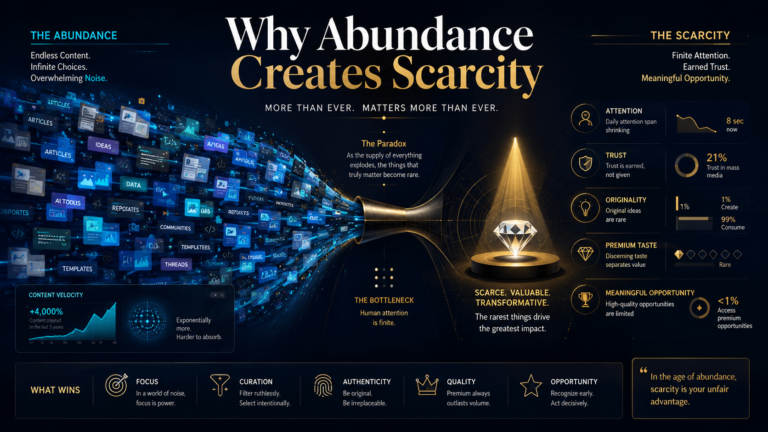
Here is the actual economic logic underneath this trend, and it is a genuinely old, well understood pattern applied to a genuinely new situation. When one thing becomes abundant and cheap, whatever remains genuinely scarce becomes more valuable by comparison, not less. Generative AI has made content creation, in the most basic sense, essentially free and instantaneous. Anyone with access to a capable AI writing tool can produce a grammatically correct, superficially competent paragraph on almost any topic within seconds. Scroll through nearly any major social platform right now and you are already wading through AI generated comments, AI generated images, and AI generated video at a scale that did not exist even two years ago.
That abundance has created a genuine, measurable crisis for platforms and companies trying to stand out inside it. Gab Ferree, former vice president of global communications at Bumble, put the underlying dynamic bluntly in comments to Business Insider, describing a market so flooded with low effort, machine generated content that companies are now willing to pay a genuine premium for someone who can credibly claim to cut through the noise. That is the entire mechanism in a single sentence. When mediocre writing becomes free and universally available, mediocre writing stops being a differentiator for any company competing for attention, trust, or investor confidence. What becomes scarce, and therefore valuable, is writing good enough that a genuinely skeptical, time poor human reader chooses to actually read it, trust it, and remember it, rather than skimming past it as one more piece of forgettable, AI shaped noise.
There is a second, equally important driver working alongside the noise problem, and it has less to do with content saturation and more to do with trust and legitimacy specifically. AI companies are, almost uniquely among the current generation of major tech companies, operating in an environment where public trust genuinely matters to their survival and growth, not just their brand image. They face real regulatory scrutiny, real public anxiety about what their products actually do, and real skepticism from investors trying to separate genuine capability from hype. In that environment, the ability to craft a clear, credible, honest sounding narrative about what a company’s technology actually does, and does not do, becomes a genuine strategic asset rather than a nice to have marketing function. Elite communicators are increasingly treated, and paid, more like essential technical staff than like a traditional support function, precisely because the story a company tells about its own technology has become as commercially important as the technology itself.
What These Jobs Actually Require
It is worth being specific about what these roles genuinely demand day to day, because it clarifies exactly which writing skills are appreciating in value and which are not. According to the actual job descriptions behind these hires, the core responsibilities include defining a company’s overarching narrative, particularly around AI itself, writing speeches and executive facing communication, translating genuinely dense technical work into language a non technical audience can follow without feeling condescended to, managing media relations under real scrutiny, and orchestrating storytelling campaigns that hold together across multiple channels and audiences at once.
Crucially, these roles also require enough genuine technical literacy to ask smart, informed questions of the engineers and researchers actually building the underlying technology, and enough judgment to know which details matter to a given audience and which ones should be simplified or cut entirely without misleading anyone. This is a meaningfully different skill than simply producing fluent prose, which is exactly the thing AI has become genuinely good at. It is closer to a hybrid of journalism, strategic judgment, and genuine subject matter fluency, the ability to understand something complicated well enough to explain it honestly and compellingly to someone who does not have the time or background to understand it themselves.
That distinction explains why the competition for these specific roles remains fierce even at extraordinary compensation levels. Chime, the financial technology company, reportedly received more than five hundred applications for a director of corporate editorial and storytelling role, with the Wall Street Journal reporting that most applicants were former or current journalists specifically. That detail matters. The people best positioned to win these roles are not necessarily people with a traditional marketing background. They are people trained specifically in exactly the skill AI struggles to replicate reliably, finding the true, compelling core of a complicated story and telling it clearly under real scrutiny, with real consequences attached to getting it wrong.
The Anthropic Example
Anthropic’s own hiring pattern is worth calling out specifically, because it comes from the company arguably closest to the center of this entire story. Rather than shrinking its communications function as its AI products became more capable, Anthropic has significantly expanded its communications team, reportedly tripling its size over a relatively short period. That is a genuinely notable signal coming from a company whose entire commercial existence depends on people believing its AI systems are capable, safe, and trustworthy. If any organization had a plausible reason to believe AI could handle its own public narrative without much human involvement, it would be a leading AI lab. Instead, Anthropic has moved in the opposite direction, investing more heavily in human led storytelling and communication precisely as its underlying technology has grown more advanced, not less.
That pattern is consistent with the broader trend across the industry, and it undercuts one of the more common assumptions about AI’s effect on knowledge work, that companies deepest in AI development would naturally be the ones most eager to automate away human communication roles first. The evidence points the other way. The companies with the clearest, most direct view of what current AI systems can and cannot reliably do are, by their own hiring decisions, signaling that skilled human writing and storytelling remains a genuinely differentiated, high value capability, not a commodity function ready to be automated away.
A Pattern That Has Happened Before
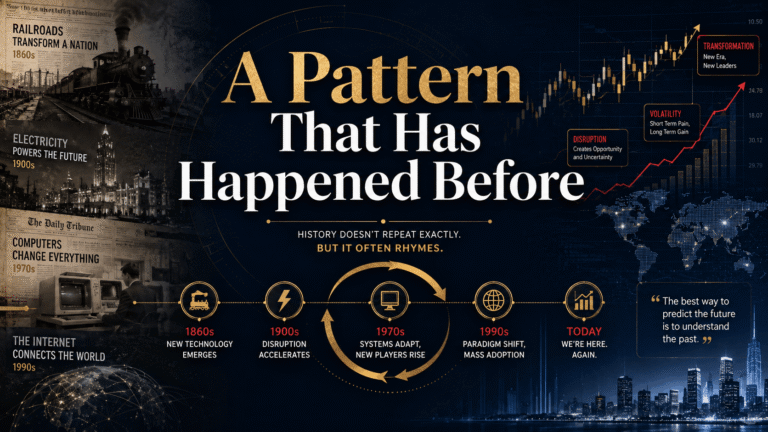
It is worth noting that this specific dynamic, abundance in one place creating scarcity and premium value somewhere adjacent, is not a new phenomenon invented by the AI era. It has played out repeatedly across other industries whenever a previously scarce good suddenly became cheap and widely available, and looking at those earlier examples helps explain why this pattern is likely to hold rather than reverse once the initial AI hype settles down.
When digital photography made taking a picture essentially free, the value of a single competent snapshot collapsed almost overnight, since anyone with a phone could produce a technically adequate photo instantly. What did not collapse, and in many cases became considerably more valuable, was genuinely skilled photography, the kind that demonstrates real compositional judgment, technical mastery of light, and a distinct creative point of view. Wedding photographers, brand photographers, and photojournalists working at the top of their craft did not become obsolete once everyone owned a capable camera. If anything, the flood of mediocre, interchangeable photos made genuinely excellent photography stand out more clearly, and the top tier of that profession has continued commanding real premiums precisely because true skill became easier to distinguish once baseline competence became universal and free.
A similar pattern played out with desktop publishing and graphic design decades earlier. Once basic design tools became cheap and widely accessible, anyone could produce a passable flyer or a serviceable logo. That did not eliminate demand for skilled graphic designers. It eliminated demand for mediocre ones, while genuinely talented designers who could solve real brand and communication problems became more valuable, not less, precisely because they now stood out clearly against a much larger, much more competent baseline of amateur work flooding the market.
The writing profession appears to be following the exact same arc, just compressed into a considerably shorter timeframe because AI writing tools improved so quickly. The baseline competence required to produce readable prose has collapsed to nearly zero cost, and the writers, communicators, and storytellers who can consistently demonstrate genuine judgment, trust, and a distinct point of view are being rewarded precisely because that specific combination has become harder to fake convincingly, not because writing itself has become more valuable across the board.
The Debate Worth Having
This is exactly the point in the story where the conversation deserves real, honest argument rather than settling for whichever framing feels most reassuring to anyone currently working as a writer.
The Case That This Proves Human Writing Is Genuinely Becoming More Valuable
The counterargument does not dispute the numbers. It challenges what they actually represent. These are an extremely small number of senior, highly specialized roles at a handful of the wealthiest, most well funded companies in the entire economy, hired for a very specific function, shaping public narrative and investor trust around genuinely high stakes, high scrutiny technology. Critics reasonably point out that this says very little about the prospects for the much larger population of working writers, freelance content creators, and junior communications professionals who are not competing for a director of communications role at Netflix or OpenAI, and who may be experiencing a very different, considerably harder market as AI tools continue to compress demand for more routine, less strategic writing work.
There is also a fair point about survivorship bias in how this story gets told. A handful of extraordinary salaries at the very top of a profession make for a compelling, shareable headline, but they do not necessarily reflect what is happening to median income or median demand across the writing profession as a whole. It is entirely possible, critics argue, for elite, strategic communication roles to become more valuable at the very same time that AI genuinely displaces a meaningful amount of more routine, lower skilled writing work, meaning the honest picture is not writing is thriving broadly but rather a specific, narrow, high judgment tier of writing is thriving while a much larger base of more commoditized writing work faces real, ongoing pressure.
Where This Actually Lands
Both readings are supported by real evidence, and the honest synthesis sits somewhere between them rather than fully endorsing either extreme. The abundance and scarcity mechanism described earlier is genuinely real and is genuinely driving real compensation increases at the top of the profession, and dismissing that as meaningless because it only affects a small number of roles misses a real, important signal about where value is actually accruing in a market flooded with cheap AI content. At the same time, it would be a mistake to read a handful of headline grabbing salaries as proof that the entire writing profession is thriving uniformly, when the same abundance of AI generated content that is driving up demand for elite storytellers may simultaneously be compressing demand and pay for more routine writing work further down the skill ladder. The realistic takeaway is that writing is not becoming more valuable everywhere. Writing that demonstrates genuine judgment, trustworthiness, and the ability to make something complicated clear and compelling is becoming considerably more valuable, specifically because that particular skill has become harder to fake convincingly at scale, while writing that could always be described as competent but interchangeable is facing real, ongoing pressure from exactly the same abundance that is driving the premium at the top.
What This Actually Means For Your Business
Step outside the individual career question for a moment, because there is a genuinely practical lesson here for any business thinking about its own content, marketing, and communication strategy, not just for individual writers wondering about their own prospects. The same abundance and scarcity logic driving these extraordinary salaries applies directly to how your business’s content gets perceived in a marketplace increasingly flooded with AI generated material. If your website copy, your marketing content, and your customer communication read like everything else being churned out by the same handful of AI tools everyone else is using, that content is now competing in the most crowded, most commoditized category that exists. If your content demonstrates real judgment, real understanding of your specific customers, and a genuinely distinct voice, it stands out precisely because that distinctiveness has become considerably rarer and more valuable.
This is exactly the thinking behind how our own content and communication work is built. Our digital marketing service is designed around producing genuinely differentiated content and messaging rather than generic, interchangeable output, for exactly the reason this article describes, generic content has never been cheaper to produce, and never been less effective at actually standing out. If what your business needs is the underlying platform to put that content on, our web development service, app development service, and e commerce website development service all handle that build properly, and you can see real examples of that work in our portfolio. If your business needs custom tooling to support a genuinely strategic content or communication operation rather than a generic AI writing tool, our custom software development service and AI automation service can help figure out exactly where automation genuinely helps and where the human judgment this entire article describes needs to stay firmly in the loop.
If you would rather build genuinely strong writing and communication skill on your own team, Zynthx Academy runs training covering exactly the surrounding skills that make this kind of work possible, including our digital marketing training program and SEO training program for teams who want their content to actually reach people, our uses of AI training program for a grounded, practical overview of where AI genuinely helps content work versus where it does not, and our python programming training program, machine learning training program, and data science training program for teams who want to build the tools rather than just use off the shelf ones. Our web development training program and app development training program cover turning any of this into a real shipped product, our ethical hacking training program matters as more communication infrastructure runs through systems that need proper security review, and our e commerce website training program rounds out the picture for teams selling online specifically.
If you are further along and want to work in this space directly, our careers page lists open roles, with dedicated pages to apply for a job, apply for an internship, or apply as a skills trainer. You can read more about who we are on our about page, browse more pieces like this one on our blogs page and our dedicated blog section, including our recent post on the best website design trends for businesses in 2026, or simply contact us directly. You can also follow along on Facebook, Instagram, and LinkedIn, see our full company overview on Slideshare, or read verified client feedback on our Bizoforce profile and Yellow Pages UAE listing.
Common Questions
Are these high paying writing jobs actually real, or exaggerated for headlines. They are real and independently verifiable. Netflix’s director of product and technology communications listing reaching seven hundred seventy five thousand dollars a year, and OpenAI’s multiple communications roles listed around four hundred thousand dollars, both come from publicly posted job listings reported on by Entrepreneur and originally covered by Business Insider, not from anonymous or unverified sources.
Do these roles require any coding or technical background. No formal coding skill is required. They do require enough technical literacy to understand complex AI systems well enough to ask informed questions and explain the technology accurately to a non technical audience, which is a different kind of technical fluency than programming ability.
Does this trend mean AI has not actually affected the writing profession at all. No, and it would be inaccurate to claim that. The evidence specifically supports a narrower claim, that elite, high judgment, high trust writing and storytelling roles are becoming more valuable, not that every category of writing work is thriving equally. More routine, commoditized writing work may still be experiencing real pressure from the same AI tools driving demand for elite storytellers.
Why would an AI company want more human writers rather than fewer. Because the core function these roles serve, building public trust and explaining complex technology honestly and compellingly, is not the same task as producing fluent prose, which is exactly what AI has become good at. Trust and narrative credibility remain genuinely difficult for AI to replicate convincingly at the level these companies need, particularly given the real regulatory and public scrutiny AI companies face.
What does this mean for someone considering a career in writing today. The specific lesson is not that any writing career is automatically safe, but that developing genuine judgment, subject matter fluency, and the ability to write something a skeptical, time poor reader actually wants to read appears to be a durable, increasingly valuable skill set, distinct from the more commoditized writing tasks AI now handles competently on its own.

The Honest Closing Thought
The instinct to read a headline like this one as proof that AI panic was always overblown is understandable, and it is not entirely wrong. But the more useful lesson sitting underneath these specific salaries is not that writing is simply safe now. It is that the value of writing has genuinely redistributed, away from the kind of competent, interchangeable prose AI now produces for nearly nothing, and toward the kind of judgment heavy, trust building, genuinely distinct writing that remains difficult to fake convincingly at scale. The companies willing to pay seven hundred seventy five thousand dollars for a single communications hire are not being sentimental about human creativity. They are making a hard nosed bet that in a marketplace flooded with cheap, forgettable AI content, the ability to write something people actually trust and remember has become one of the scarcest, most commercially valuable skills available, and they are backing that bet with real money rather than just saying it out loud.
That distinction, between writing broadly and writing that demonstrates real, hard to fake judgment specifically, is probably the single most useful thing to take away from this story, whether you are a writer trying to plan a career or a business trying to figure out how your own content should actually sound in a world where cheap, competent AI writing is no longer a differentiator at all.
Let's Start a Project
Share your idea with Zynthx and our team will help you plan the next clear step.
Writer : Haris Waheed
Full Stack Web Developer & SEO Specialist | Building Fast, Search Optimized Websites for Business Growth.


