
Nothing Is Going To Be The Same After This, AI Is Changing Fast

Writer : Haris Waheed
Full Stack Web Developer & SEO Specialist | Building Fast, Search Optimized Websites for Business Growth.

In Brief
Not long ago, China’s most capable ai labs were reliably described as six to eight months behind the American frontier, a gap wide enough that most serious industry conversations treated it as a settled fact rather than an open question. On July 16, 2026, a Beijing based lab called Moonshot AI released a model called Kimi K3, and that settled fact stopped being settled. K3 landed fourth on the independent Artificial Analysis Intelligence Index, behind only Claude Fable 5 and OpenAI’s GPT-5.6 Sol, ahead of Anthropic’s own flagship Opus 4.8, at roughly half the per task cost of that flagship, and it is entirely open weight, meaning anyone will soon be able to download and run it themselves. It also happens to be the largest openly released AI model ever built, at 2.8 trillion parameters. Almost immediately, a specific accusation resurfaced, that Chinese labs including Moonshot get to this level of capability partly by training on outputs quietly extracted from American models, an accusation Anthropic itself formally made against Moonshot just months earlier. This article walks through what K3 actually is, what its real benchmark numbers show, the genuinely uncomfortable question of who actually has the moral high ground in the stolen weights argument, and why this specific moment, with hundreds of billions of dollars already committed to the assumption that frontier capability would stay expensive and exclusive, might be the worst possible time for that assumption to break.
Now, the full story.
The Gap That Closed
For most of the recent history of the AI race, there has been a comfortable, widely repeated shorthand about where China’s frontier labs stood relative to the American ones, roughly six to eight months behind. It was not an insult exactly, more a working assumption baked into how American labs planned product roadmaps, how investors modeled competitive risk, and how the wider industry talked about the shape of the race. A six to eight month lag is manageable. It gives the leader time to keep extending distance, time to build a moat, time to assume the gap is closing slowly enough that it never actually becomes existential to a business model built on staying ahead.
Kimi K3 did not close that gap slowly. According to independent benchmark tracking from Artificial Analysis, the widely respected third party evaluator the industry increasingly treats as a neutral referee rather than trusting any single lab’s self reported numbers, K3 landed at position four on the overall Intelligence Index, trailing only Claude Fable 5 and OpenAI’s GPT-5.6 Sol tier, and specifically ahead of Anthropic’s own Opus 4.8, previously considered a clear top tier flagship model in its own right. On a private, long horizon knowledge work evaluation run by the same firm, K3 reached an Elo score of 1547, a jump of seven hundred thirty two points over its own predecessor from just months earlier, a scale of single generation improvement that is genuinely rare in this industry’s own recent history. If you would rather skip straight to talking about what this kind of fast moving AI landscape means for your own business planning, our team at Zynthx Technologies tracks exactly this kind of shift for clients, and you can start a project or book a free consultation any time.
What Kimi K3 Actually Is
Moonshot AI, the Beijing based startup behind K3 and backed by Alibaba, released the model on July 16, 2026, describing it in its own technical materials as the first open three trillion parameter class system, a specific, deliberate framing built around a genuinely enormous 2.8 trillion parameter mixture of experts architecture, more than double the size of the company’s previous flagship. It ships with native multimodal understanding, meaning it can process images directly rather than through a separate bolted on system, and a one million token context window, letting it hold an enormous amount of information in a single working session. It is currently accessible through Moonshot’s own website and API, with full open weights, the actual underlying model parameters anyone can download and run on their own infrastructure, promised by July 27, 2026, a date worth noting because it means the most consequential part of this release, genuinely open, unrestricted access to a near frontier model, had not even fully landed at the time the benchmark numbers first made headlines.
It is worth being clear about what open weight access to something this size actually means in practical terms, and what it does not. The model’s weights reportedly total around one point four terabytes even in a compressed four bit format, and Moonshot’s own deployment guidance describes a supernode configuration requiring sixty four or more accelerators just to run it. This is not a model an individual developer downloads and runs on a laptop, or even a single well equipped desktop workstation. It is squarely enterprise and data center scale infrastructure, which matters enormously for understanding who actually benefits from open weights at this specific scale, largely well resourced companies and research labs rather than individual hobbyists, even though the license technically makes it available to anyone.
The context behind Moonshot’s push to reach this scale is worth understanding too, because it explains the urgency behind the release. According to reporting from VentureBeat, Moonshot’s Kimi chatbot had actually been slipping in relevance within the competitive Chinese AI market, sliding from third to seventh place in monthly active users after DeepSeek’s low cost R1 model disrupted the entire domestic landscape in early 2025. Moonshot’s strategic pivot toward open source releases, beginning with the original Kimi K2 in July 2025 and accelerating through K2.5 and K2.6, was in significant part an attempt to reclaim relevance in a market that had briefly moved past them. K3 represents the culmination of that specific competitive pressure, not a company casually flexing capability from a position of comfort, but one clawing its way back toward relevance through sheer scale and open access.
The Benchmark Picture
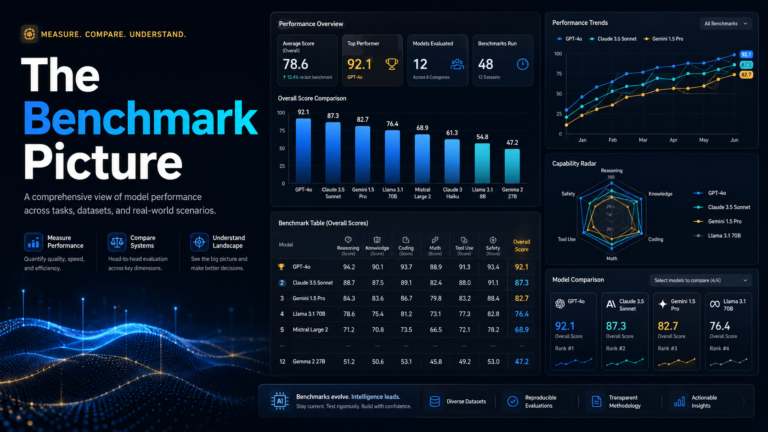
The specific numbers are worth sitting with directly rather than taking on faith, because they are unusually well documented for a launch this recent. On the Artificial Analysis Intelligence Index, the composite score meant to reflect broad capability across a wide range of tasks, K3 scored fifty seven, placing it fourth overall, specifically behind the Fable 5 and GPT-5.6 Sol tiers and ahead of Opus 4.8. On cost, the same evaluator put K3’s price per task at zero point nine four dollars, close to GPT-5.6 Sol’s one dollar and four cents, and meaningfully below Opus 4.8’s one dollar and eighty cents, roughly half the cost of Anthropic’s own flagship for broadly comparable capability, though still priced above the cheapest open weight alternatives available.
On more specific, practically important tasks, the picture gets even more striking. K3 took the number one position on the Frontend Code Arena, a widely followed human preference benchmark specifically measuring how well a model builds real, usable web interfaces, a category where it actually surpassed Claude Fable 5, Anthropic’s own top tier model. That result represented a seventeen place jump from K3’s own immediate predecessor, moving from eighteenth position to first in a single generational release, and independent trackers noted K3 ranked first specifically in six of seven measured design domains, including brand and marketing work and reference based design tasks, categories that had previously been considered a clear American strength.
It is worth being careful and honest about the limits of these numbers too, in a way that matters for anyone actually deciding whether to build on this model right now. As of the numbers first circulating, every published K3 result was either a claim made directly by Moonshot itself, or derived from API access rather than the actual underlying weights, which were not yet publicly released and therefore not yet independently verifiable by the wider research community in the way a fully open model normally would be. Technology outlets covering the launch were explicit about this distinction, treating the July 27 weight release date as the real moment independent verification becomes fully possible, rather than treating the initial benchmark claims as beyond question simply because a respected third party evaluator had measured them through API access.
You Stole Our Weights
Here is where the story stops being a straightforward capability comparison and becomes something considerably more uncomfortable, and considerably more interesting. Chinese frontier models, K3 included, face a specific, recurring accusation from American labs and commentators, that their rapid capability gains come partly from training on outputs generated by American models, effectively learning a shortcut version of frontier capability without paying the multi billion dollar training and infrastructure cost the original labs absorbed to get there in the first place.
This is not a vague, unsubstantiated grievance in this specific case. Anthropic itself formally accused Moonshot, in February 2026, of using approximately three point four million Claude exchanges specifically to train its own models through a technique called distillation, essentially extracting the patterns and knowledge embedded in Claude’s outputs and using that extracted signal to accelerate training a separate, competing model, without the multi billion dollar original training run that produced Claude’s underlying capability in the first place. That accusation is worth taking seriously on its own terms, and Kimi K3 now benchmarks within a few points of the exact models named in that specific complaint, a detail that gives the accusation considerably more teeth than a generic industry grumble.
And here is the part of the story that makes the moral picture genuinely complicated rather than simple. American frontier labs, Anthropic very much included, built their own foundational models by training on enormous quantities of copyrighted human created work, books, articles, code, design work, and countless other categories of protected material, largely without seeking permission from or compensating the original creators. This is not a disputed, fringe claim. It is the subject of multiple ongoing lawsuits against major American AI labs, and it is a pattern individual creators have documented directly and specifically, describing AI models repeating their own distinctive language and methods back to them nearly verbatim when asked about their own original work.
Put plainly, the uncomfortable moral symmetry sitting at the center of this entire controversy is this. If a Chinese lab trained on the outputs of an American model that itself was trained on copyrighted human work without permission, the honest question becomes considerably harder to answer cleanly, who actually has the moral high ground in an argument about theft, when neither side’s own foundational training process is entirely free of the exact same underlying complaint. Neither party in this dispute is arguing from a position of unambiguous innocence, and pretending otherwise, in either direction, requires ignoring half of the actual, well documented picture.
The Worst Possible Moment
Here is the part of this story that matters most for anyone thinking practically about where the AI industry is actually headed, rather than just who scored better on which benchmark this specific week. This capability jump did not happen in a vacuum. It happened at a moment when the American AI industry has already committed an almost unimaginable amount of capital to a specific, load bearing assumption, that staying meaningfully ahead of the rest of the world in raw model capability would remain both achievable and commercially defensible for the foreseeable future.
That assumption underpins hundreds of billions of dollars in already committed infrastructure spending, data centers, specialized chips, power contracts, and multi year compute agreements, all priced and justified around the expectation that frontier capability would stay scarce enough, and therefore valuable enough, to justify the enormous, ongoing cost of staying at the absolute cutting edge. A genuinely capable, dramatically cheaper, openly available alternative landing within a few benchmark points of the actual frontier does not necessarily break that entire financial structure overnight. It does meaningfully undermine the specific premise that scarcity alone, rather than continuously demonstrated, defensible superiority, is enough to justify premium pricing indefinitely. When the fourth best model in the world costs roughly half what the flagship costs, and will soon be downloadable and self hostable by anyone with the infrastructure to run it, the pricing power baked into a lot of already committed capital spending gets considerably harder to defend with a straight face.
This is precisely the dynamic several of the largest recent AI infrastructure bets were built to avoid, or at least to outrun. A model landing this close to the frontier, at this price point, with open weights arriving within days of the initial benchmark claims, is exactly the kind of event that turns a comfortable, multi year competitive advantage into a considerably more urgent, considerably more contested race, precisely at the moment when the capital already committed to the old assumption is hardest to walk back or reallocate quickly.
The DeepSeek Precedent
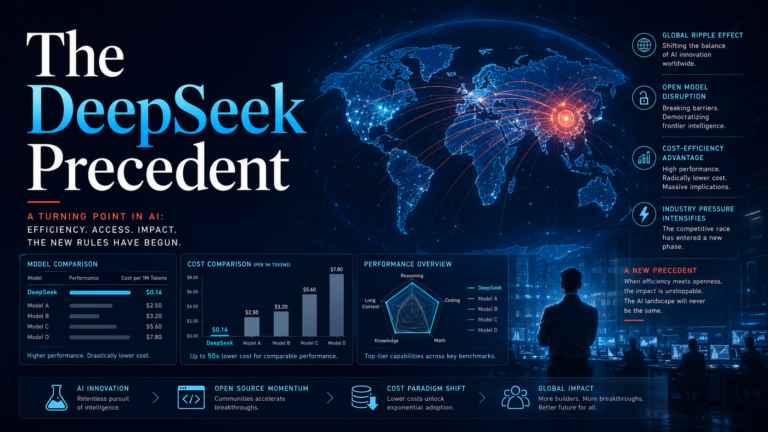
To understand why this specific release generated the reaction it did, it helps to remember this is not the first time a Chinese model has forced a genuine reassessment of the competitive landscape. In January 2025, DeepSeek released its R1 model, a genuinely capable, dramatically cheaper alternative that briefly triggered real turmoil in American AI stock valuations and forced a broad industry reckoning with the assumption that frontier capability required frontier level spending to achieve. R1’s release disrupted more than just American labs too. It hit the Chinese domestic market hard enough that Moonshot’s own Kimi chatbot, previously sitting comfortably in third place by monthly active users, slid all the way to seventh almost overnight, a genuinely humbling reversal for a company that had been considered a serious domestic leader just weeks earlier.
That history matters for two reasons. First, it demonstrates that dramatic, gap closing releases from Chinese labs are not without precedent, and the American AI industry has already lived through at least one genuine scare of this exact shape and recovered its footing within a matter of months, which is precisely the strongest evidence behind the skeptical case laid out in the debate below. Second, and this is the detail that gives K3 particular weight, Moonshot itself was directly on the receiving end of that exact same disruption less than two years ago, and its entire strategic pivot toward massive, openly released models is a direct, deliberate response to having been caught flat footed once already. K3 is not simply a company flexing capability from a position of comfort. It is a company that has already experienced exactly the kind of competitive humiliation this release is designed to prevent happening to it again, which helps explain both the scale of the bet and the urgency behind it.
The market reaction to K3’s release, at least in its first days, has been notably more measured than the reaction to DeepSeek’s R1 release eighteen months earlier, without the same kind of dramatic single day stock selloffs that characterized the earlier event. Whether that reflects genuine confidence that the American labs have already priced in this level of competitive pressure, or simply reflects that markets have grown somewhat numb to Chinese model releases generating headlines after living through the pattern once already, is itself an open, genuinely interesting question worth watching over the coming weeks rather than one this early reaction alone can answer definitively.
The Debate Worth Having
This is exactly the point in the story where the conversation deserves real, honest argument rather than settling for whichever framing generates the most alarm or the most dismissal.
The Case That This Genuinely Changes Everything
The strongest version of this argument takes the benchmark numbers at face value and follows the logic through to its natural conclusion. A model that is fourth in the world, at half the cost of a leading flagship, openly available for anyone to download and self host within days of launch, is not a minor competitive footnote. It is a direct, credible threat to the entire commercial premise that frontier AI capability justifies premium, exclusive pricing, because scarcity is precisely what a fully open, near frontier alternative eliminates. If K3’s numbers hold up once the actual weights are independently verified on July 27, the practical effect is that a huge share of real world use cases, the kind of everyday coding, writing, and reasoning tasks that make up the overwhelming majority of actual commercial AI usage, no longer require paying premium prices for a marginal capability advantage that a free, self hostable alternative closes most of the way. That is exactly the kind of shift that reshapes an entire industry’s pricing structure, not overnight, but within a genuinely short window.
The Case That This Is A Familiar Pattern, Not A Rupture
The counterargument does not dispute the specific numbers. It challenges how much weight a single, not yet independently verified release deserves relative to a longer, repeating pattern the industry has already lived through multiple times. Chinese labs have produced headline grabbing, gap closing releases before, DeepSeek’s R1 in early 2025 being the most prominent recent example, and in each prior case, the American frontier labs responded within months with their own next generation release that reopened a meaningful gap. Critics reasonably point out that treating this specific release as a permanent, structural rupture rather than the latest entry in an ongoing, cyclical leapfrogging pattern risks overreacting to a single data point, particularly one whose most important claims remain formally unverified until the actual weights are released and independently tested by the broader research community, rather than measured only through Moonshot’s own API.
There is also a fair point about what benchmark leadership on specific tasks, however impressive, does not automatically prove. Topping a frontend design benchmark or a coding preference board is a genuinely real, genuinely impressive achievement, but it does not automatically translate into the kind of broad, reliable, enterprise grade trustworthiness that large paying customers actually weigh heavily when choosing which model to build a real, mission critical business on, particularly for a model still facing formal, unresolved accusations about how a meaningful share of its own training data was actually obtained.
Where This Actually Lands
Both readings are defensible, and the honest synthesis sits in the tension between them rather than fully resolving toward either extreme. The gap genuinely has narrowed by a real, measurable, and unusually large amount in a single release, and dismissing that as just another cycle risks underestimating how differently this specific release is being received, at this specific moment, against this specific backdrop of enormous already committed American infrastructure spending. At the same time, a single release, benchmarked partly through unverified API access rather than fully open, independently tested weights, has not yet definitively proven it can sustain that position once fully scrutinized, and the historical pattern of American labs responding with their own next leap within months remains a genuinely reasonable base case rather than wishful thinking. What is not seriously disputed is that the margin for complacency, on both the capability side and the pricing side, just got measurably thinner than it was two weeks ago, and that alone is worth taking seriously regardless of how the longer cycle eventually plays out.
What This Actually Means For Your Business
Step outside the geopolitical and competitive drama for a moment, because there is a genuinely practical lesson here for any business currently building on, or planning to build on, a single AI provider without much of a contingency plan. The core lesson is not that you should rush to switch to whichever model tops this week’s benchmark leaderboard. It is that the pricing and access landscape for frontier level AI capability is proving to be considerably more volatile, and considerably less predictable a year or two out, than most business planning built around AI tools has assumed so far.
This is exactly the kind of strategic uncertainty our AI automation service is built to help a business navigate, figuring out where to build genuine flexibility into your AI dependent workflows now, rather than discovering the hard way that a pricing or access assumption you built a real budget around has shifted underneath you. If what your business actually needs is a properly built product or platform that stays resilient regardless of which specific model happens to lead the benchmarks in any given month, our web development service, app development service, and custom software development service are all built around exactly that kind of architectural flexibility, and you can see real examples of that work in our portfolio. If your business sells online and is thinking about how shifting AI costs affect your own margins, our e commerce website development service is worth a conversation, and once your product is solid, our digital marketing service helps make sure it reaches the right audience regardless of which underlying AI tools are powering it.
If you would rather build this understanding on your own team, Zynthx Academy runs training built for exactly this kind of fast moving landscape, including our uses of AI training program for a grounded, practical overview, and our machine learning training program and data science training program for teams who want to genuinely understand how to evaluate a new model release rather than reacting to whichever headline moves first. Our python programming training program covers the practical building side, our web development training program and app development training program cover turning that understanding into a real, resilient product, and our ethical hacking training program matters increasingly as more businesses evaluate self hosting open weight models directly rather than relying entirely on a managed API. Our digital marketing training program, SEO training program, and e commerce website training program round out the picture for teams focused on growth once the underlying technical foundation is solid.
If you are further along and want to work in this space directly, our careers page lists open roles, with dedicated pages to apply for a job, apply for an internship, or apply as a skills trainer. You can read more about who we are on our about page, browse more pieces like this one on our blogs page and our dedicated blog section, including our recent post on the best website design trends for businesses in 2026, or simply contact us directly. You can also follow along on Facebook, Instagram, and LinkedIn, see our full company overview on Slideshare, or read verified client feedback on our Bizoforce profile and Yellow Pages UAE listing.

Common Questions
Is Kimi K3 actually better than Claude or GPT models. Not on the current independent benchmark ranking overall, where it sits fourth behind Claude Fable 5 and GPT-5.6 Sol, though it does lead specifically on certain frontend and design focused benchmarks, and it outperforms Anthropic’s own Opus 4.8 on the broad Intelligence Index while costing roughly half as much per task.
Can I actually run Kimi K3 myself right now. Not practically for most individuals or small teams. The model requires an estimated sixty four or more accelerators and around one point four terabytes of storage even in compressed form, meaning it is realistically an enterprise or data center scale deployment rather than something that runs on a personal machine, even once the full weights are publicly released.
Is the accusation that Chinese models train on American model outputs actually true. Anthropic made a specific, formal accusation against Moonshot in February 2026 involving roughly three point four million Claude exchanges allegedly used for distillation training. That is a real, documented accusation rather than vague speculation, though it should be weighed alongside the equally well documented fact that American frontier labs themselves trained on large volumes of copyrighted human work without permission, a pattern currently the subject of multiple ongoing lawsuits.
Why does the timing of this release matter so much. It lands directly against a backdrop of hundreds of billions of dollars in already committed American AI infrastructure spending, built around the assumption that frontier capability would remain scarce and commercially exclusive for the foreseeable future. A credible, dramatically cheaper, openly available near frontier alternative puts real pressure on that specific pricing assumption, regardless of how the longer competitive cycle eventually plays out.
Should a business switch to Kimi K3 right now based on these numbers. Not based on benchmark headlines alone. The most consequential verification, independent testing against the actual open weights rather than API access, was not complete at the time these numbers first circulated, and any serious adoption decision should wait for that fuller picture rather than reacting to launch week claims.
The Honest Closing Thought
The title of this piece is not exaggeration for its own sake. Something genuinely significant happened on July 16, 2026, a gap the industry had treated as a stable, predictable fact for years closed by a meaningful margin in a single release, from a lab that had been struggling for relevance just eighteen months earlier. Whether that specific gap stays closed, or whether the historical pattern of American labs reopening it within months repeats itself once again, is a genuinely open question the next several months will answer far more reliably than any single week of benchmark headlines can.
What is not in question is that the assumptions a huge amount of already committed capital were built around, that frontier capability would remain scarce, expensive, and largely under American control for the foreseeable future, just got measurably less certain than they were two weeks ago. That uncertainty is the real story here, more than any single benchmark number, and it is exactly the kind of shift worth taking seriously without either panicking over it or dismissing it as just another cycle, because right now, honestly, nobody outside Moonshot’s own walls knows for certain which one it actually is.
Let's Start a Project
Share your idea with Zynthx and our team will help you plan the next clear step.
Writer : Haris Waheed
Full Stack Web Developer & SEO Specialist | Building Fast, Search Optimized Websites for Business Growth.


