
NVIDIA Just Killed Big AI, and… You're the Winner?

Writer : Haris Waheed
Full Stack Web Developer & SEO Specialist | Building Fast, Search Optimized Websites for Business Growth.
In Brief
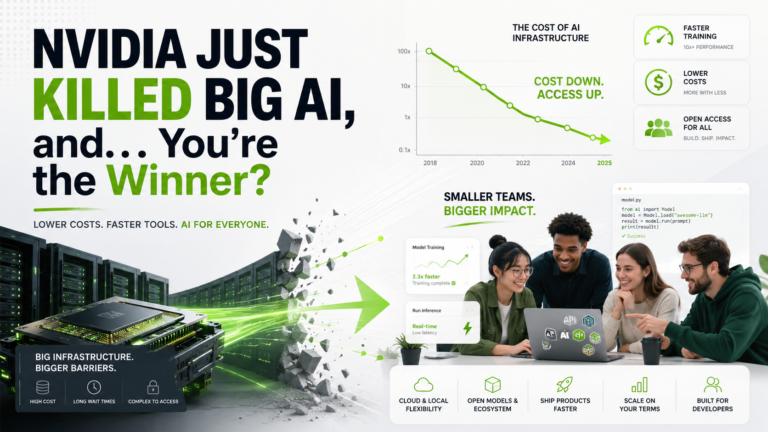
NVIDIA spent the first half of 2026 quietly releasing something that matters more than another chip announcement. Desktop scale hardware, DGX Spark and its Windows sibling RTX Spark, capable of running genuinely large AI models entirely offline, on a machine that sits on your desk rather than in someone else’s data center. The twist nobody fully expected is which models people are actually running on that hardware. A large share of the most capable open models available to run locally right now come out of China, not the United States, which means NVIDIA just built the perfect on ramp for exactly the models the big American AI labs would rather you subscribe to a cloud service instead of ever touching. Whether that genuinely threatens the subscription driven business model the largest AI companies are built on, or simply adds a new lane alongside it, is a real, unresolved debate, and it is worth having properly rather than settling for a headline. The rest of this article walks through what actually happened, argues both sides honestly, and closes with what any of this means if you run a real business rather than a research lab.
Now, the full story.
There is a particular kind of tech story that sounds like hyperbole right up until you check the actual numbers, and then it turns out to be almost understated. This is one of those stories. For years, the assumption baked into almost every AI product roadmap was simple. Real intelligence lives in the cloud. You rent access to it by the token, the request, or the month, and the company running the data center underneath that access owns the relationship with you indefinitely. NVIDIA just built hardware that quietly breaks that assumption for a meaningful and fast growing slice of users, and the irony sitting underneath it is almost too good not to talk about honestly.
If you want to skip straight to talking through what any of this actually means for your own business rather than the industry in general, our team at Zynthx Technologies works through exactly these kinds of infrastructure decisions with clients regularly, and you can start a project or book a free consultation any time.
What Actually Happened
NVIDIA has spent most of 2026 rolling out a genuinely new category of personal computer, one built specifically to run large AI models entirely on device rather than over the internet. DGX Spark, powered by the company’s Grace Blackwell GB10 superchip, packs 128 gigabytes of unified memory into a desktop small enough to sit next to a monitor, capable of running models with up to roughly 200 billion parameters locally. Jensen Huang, NVIDIA’s founder and chief executive, described the mission plainly when the product shipped, framing it as putting an AI supercomputer on the desk of every researcher, developer, and student rather than keeping that capability locked inside a handful of corporate data centers.
That framing matters, because it is a direct echo of how NVIDIA describes its own origin story in this industry. Huang has pointed out that the very first DGX system, delivered by hand to a small startup called OpenAI back in 2016, is the machine that eventually led to ChatGPT and the entire modern AI boom. Ten years later, the company is explicitly trying to repeat that move, except this time the recipient is not a single well funded lab. It is anyone with roughly four thousand dollars and a desk.
By June 2026, NVIDIA extended the same idea to Windows users with RTX Spark, and pushed further with DGX Station, a larger desk side system built around the GB300 Grace Blackwell Ultra chip capable of holding models up to a trillion parameters, the kind of scale that used to require a full server rack. Software updates rolled out alongside the hardware made the whole experience dramatically simpler too, with a streamlined install process that gets a new user from unboxing to a running local AI agent in minutes rather than the hours of manual configuration this used to require.
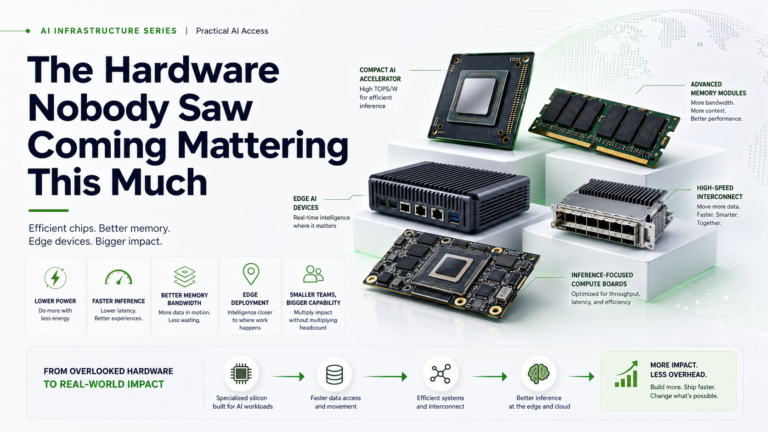
The Hardware Nobody Saw Coming Mattering This Much
None of this would be particularly newsworthy on its own. NVIDIA makes chips, and making bigger, faster chips is the entire business. What makes this specific moment genuinely interesting is the timing. It arrived right as the cost of running AI in the cloud stopped feeling like an afterthought for a lot of serious users and started feeling like a real, recurring line item worth reconsidering. Independent buyer guides published in the middle of 2026 describe founders and small teams doing the actual math and landing on a striking conclusion, that a one time hardware purchase in the four to five thousand dollar range can functionally replace a recurring monthly AI subscription bill within a matter of months, while also solving privacy and latency concerns that a cloud subscription simply cannot address.
That math got even more compelling because of a shortage nobody planned for. A global memory chip shortage through the first half of 2026 pushed prices up across the entire industry, forcing Apple to pull its largest Mac Studio memory configurations entirely and raise prices on its remaining lineup by the end of June. NVIDIA’s own hardware was not immune either, with street prices on its higher end professional cards climbing well above list price in the same window. In a strange way, the shortage made the argument for owning capable local hardware even stronger, since anyone who already had it was suddenly sitting on an asset that had become harder and more expensive for everyone else to acquire.
The Strange Twist Nobody Fully Expected
Here is where the story earns its slightly mischievous framing. The single best piece of hardware for escaping expensive, subscription driven American AI clouds is, somewhat ironically, made by an American company. But the actual models people are running on that hardware once they get it home tell a very different story. Independent reporting on local AI setups throughout 2026 repeatedly points to the same handful of names when describing what a capable desk side machine like DGX Station can actually run at full scale, models including DeepSeek V3.2, Kimi K2, and Qwen3, all developed by Chinese labs, sitting comfortably alongside American options like Meta’s Llama 4 and OpenAI’s open weight release.
That is not a coincidence, and it is not really controversial to say so. Chinese AI labs have leaned heavily into releasing genuinely capable models as open weights, freely downloadable and runnable on your own hardware, precisely at the moment when American frontier labs have leaned the opposite direction, keeping their most capable models locked behind metered, cloud only access. NVIDIA built the perfect on ramp for local AI use right as the most competitive open models available to run on that on ramp increasingly came from outside the United States. The company did not intend that outcome specifically, but it is the outcome that arrived regardless, and it is genuinely funny in the way only real, unplanned industry irony can be.
Why This Actually Threatens The Big AI Business Model
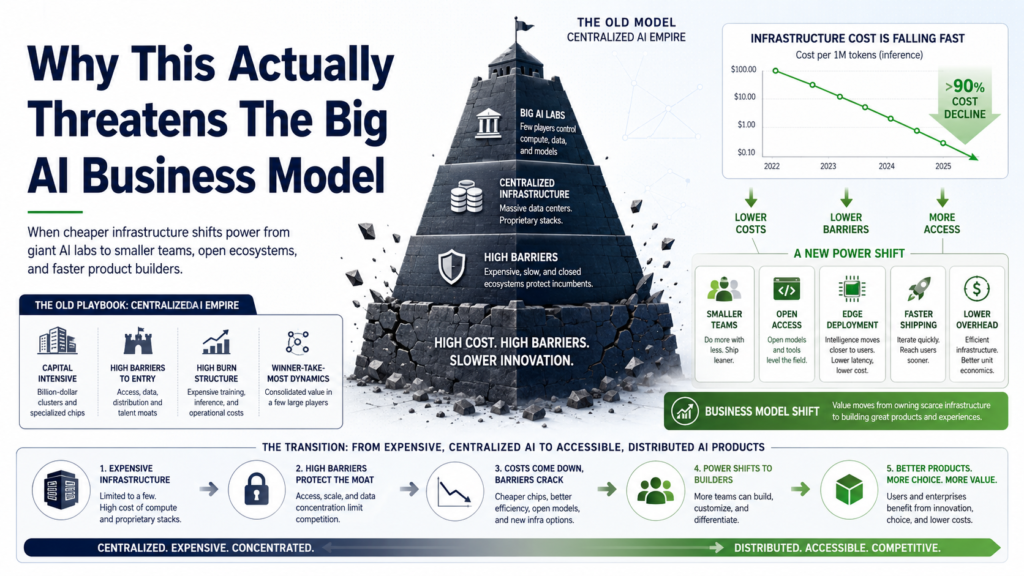
Strip away the irony and there is a real structural threat underneath this trend, worth taking seriously rather than treating purely as a punchline. The largest AI companies built their entire business around a specific bet, that most serious users would rather pay a predictable, recurring fee for access to a constantly improving model than deal with the hassle of running anything themselves. That bet works exceptionally well right up until local hardware becomes capable enough, and open models become good enough, that the hassle stops being much of a hassle at all.
The token limit anxiety that has become a genuinely common complaint among heavy AI users this year, engineers and researchers organizing their entire working schedule around when a usage cap resets, watching a countdown timer the way people used to watch a meter running on a taxi, is precisely the kind of friction that makes owning your own hardware start to look less like a hobbyist indulgence and more like a rational business decision. When the alternative to a metered subscription is a fixed cost machine that runs whenever you want it to, for as long as you want, the appeal is not abstract. It shows up directly in a spreadsheet.
How We Got Here
To understand why this moment matters, it helps to remember how quickly the subscription model became the default in the first place. When ChatGPT first exploded in popularity, running a genuinely capable language model at home was simply not realistic for almost anyone. The compute requirements were enormous, the software was fragmented and difficult to install correctly, and the gap between what a cloud hosted frontier model could do and what a hobbyist could run locally was so wide that the comparison barely made sense. Under those conditions, a metered cloud subscription was not just convenient, it was close to the only realistic option for anyone who wanted access to genuinely useful AI.
That gap did not close overnight, and it has not closed completely even now. But it has narrowed dramatically and quickly, on two fronts at once. On the hardware side, purpose built machines like DGX Spark solved the installation and compatibility nightmare that used to make local AI a genuine technical project rather than something you could set up in an afternoon. On the software side, open model labs kept releasing genuinely competitive models as free downloads rather than locking them behind an account and a metered API, which meant the hardware actually had something worth running once it arrived. Neither shift alone would have mattered nearly as much. Together, they turned local AI from a niche hobbyist pursuit into a genuinely credible alternative within the space of about eighteen months, which is a remarkably short window for an entire category of infrastructure decision to flip from theoretical to practical.
It is worth remembering too that NVIDIA did not stumble into this moment by accident. The company has been explicit for years about wanting compute to be as widely distributed as possible, for the straightforward business reason that more distributed compute means more chips sold, regardless of who ends up using them or what models they choose to run on them. NVIDIA profits whether you are running an American frontier model or a Chinese open weight model on that hardware, which is exactly why the irony at the center of this story does not actually cost NVIDIA anything. The company built the on ramp. It never particularly cared which cars ended up driving on it.
Why The Timing Specifically Matters
Context makes this moment land differently than it might have even a year earlier. Usage limits and pricing on the largest cloud AI subscriptions have tightened rather than loosened through 2026, with several major providers introducing credit based billing systems in place of the more generous flat rate access that defined the previous two years. At the same time, reports of genuine user frustration with usage caps became common enough to become a recurring topic of conversation among heavy AI users, engineers timing their work around when a limit resets, teams rationing access to their most capable model tier for only the hardest problems. That kind of friction is exactly the environment in which an alternative that removes the meter entirely starts to look appealing regardless of the upfront cost, because the frustration itself has a real, if hard to quantify, cost of its own.
Layer the memory shortage on top of that timing and the story gets even more interesting. Anyone who bought capable local AI hardware before prices spiked in the middle of 2026 is now sitting on an asset that costs meaningfully more to replace than what they originally paid, at the exact moment competitors and rivals are discovering the same hardware is suddenly harder and pricier to acquire. That is not a planned advantage. It is simply what happens when a genuine supply shortage collides with a fast growing category of buyer, and it reinforces the same underlying lesson from a slightly different angle, that owning the infrastructure rather than renting access to someone else’s has real, tangible value precisely when supply gets tight and prices move in directions nobody controls.
The Debate Worth Having
This is exactly the point in the story where I think the easy, viral framing, big AI is dead and you already won, deserves real scrutiny rather than a simple nod along.
The Case That Big AI Is Genuinely In Trouble
The strongest version of this argument rests on a fairly simple observation about switching costs. For years, the biggest moat AI companies had was raw capability, nobody else could match what the frontier labs were shipping, so the subscription was worth paying regardless of the price. That moat gets considerably thinner once locally runnable open models close most of the practical capability gap for a large share of everyday use cases, coding help, drafting, research assistance, image generation, while costing nothing ongoing beyond electricity. If a genuinely large slice of paying subscribers can get eighty or ninety percent of the value they actually use for free, on hardware they already own, the economics of a subscription business built on serving that exact slice of users get considerably harder to defend.
There is also a competitive dynamic working against the biggest labs specifically. Every dollar and every month of lead time that goes into keeping a frontier model impressive enough to justify its price tag is a dollar and a month that open model labs, several of them now genuinely close behind on raw capability, get to spend catching up without needing to fund the same enormous training runs from scratch, since they can build on techniques and public research the frontier labs themselves often publish.
The Case That Big AI Is Not Actually In Much Danger
The counterargument is less dramatic but genuinely well supported. Running a capable model locally requires hardware, setup, and a baseline of technical comfort that the overwhelming majority of casual and even professional AI users simply do not have and are not looking to acquire. The community consensus described in hardware buyer guides published this year is fairly consistent on this point, that local AI hardware serves a real but specific audience, individual developers, privacy sensitive teams, and cost conscious founders running high volume workloads, rather than the mass market that actually generates most of the revenue for the largest AI companies.
There is also a capability ceiling worth being honest about. Even the most capable models runnable on a maxed out desk side system like DGX Station are still, by most independent assessments, a notch below the very best cloud only frontier models on the hardest, most demanding tasks. For a hobbyist or a small team, that gap is easy to live with. For an enterprise customer with genuinely difficult problems and a large budget, that gap is often exactly why the subscription still gets renewed without much debate. Big AI companies are not standing still either, and several have already responded to rising local competition by expanding free tiers, cutting prices on lower end model access, and leaning harder into enterprise features that local hardware simply cannot replicate, account management, guaranteed uptime, compliance certifications, and integration support that a desk side box does not come with.
Where The Honest Answer Actually Lands
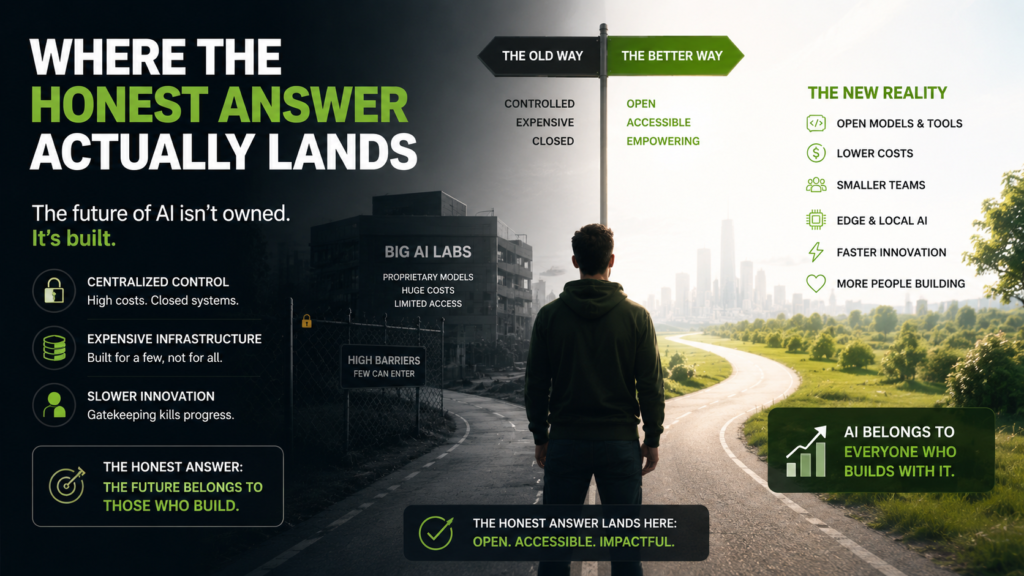
The realistic read is that this is not an extinction event for big AI, and it is not nothing either. It is a genuine segmentation of the market that used to be treated as one undifferentiated whole. A meaningful and growing slice of users, developers, privacy conscious businesses, and cost sensitive founders running heavy, repetitive workloads, now have a genuinely competitive alternative to a cloud subscription for the first time, and some real share of them will take it. The mass market casual user, and the enterprise customer with hard problems and a real budget, mostly will not, at least not yet. Both of those things are true at the same time, and pretending the whole picture is one or the other misses what is actually happening.
What This Actually Means For A Business
Set the drama aside and here is the practical question worth asking. Does owning local AI hardware or leaning on locally runnable open models actually make sense for your specific business, or is this a trend better watched from a distance for now.
The honest answer depends entirely on what you actually use AI for day to day. If your team runs high volume, repetitive AI workloads, generating large amounts of content, processing large volumes of customer data, or running the same kind of task thousands of times a month, the economics genuinely do favor exploring local or hybrid infrastructure, since the savings compound quickly at scale. If your use is occasional, exploratory, or dependent on cutting edge capability for genuinely hard problems, a cloud subscription remains the more sensible default for now, and chasing the local hardware trend purely because it is having a moment would be solving a cost problem you do not actually have.
This is exactly the kind of infrastructure decision worth getting a second, informed opinion on before committing real budget to either direction. Our AI automation service is built around exactly this kind of practical assessment, helping a business figure out where automation genuinely saves money versus where it adds complexity without real return. If what your business actually needs is a properly built product or platform on top of whichever AI infrastructure makes sense, our web development service, app development service, and custom software development service all handle that build regardless of which direction the underlying AI decision goes, and you can see real examples of this kind of work in our portfolio.
If your business sells anything online and is thinking about how AI touches product recommendations, customer support, or content generation on that storefront specifically, our e commerce website development service is worth a conversation, and once the underlying product is solid, our digital marketing service helps make sure it actually reaches the right audience. If you would rather build this understanding on your own team instead of relying entirely on an outside partner, Zynthx Academy runs training built for exactly this landscape, including our uses of AI training program for a grounded practical overview, our machine learning training program and data science training program for teams who want to go considerably deeper, and our python programming training program for anyone who wants to actually build on top of local models rather than just run them out of the box. Our web development training program and app development training program cover turning any of this into a real shipped product, and our ethical hacking training program matters more than ever as more businesses run AI workloads on infrastructure they own and are personally responsible for securing. Our digital marketing training program, SEO training program, and e commerce website training program round out the picture for teams focused on the growth side rather than the infrastructure side specifically.
If you are further along and want to work in this space directly, our careers page lists open roles, with dedicated pages to apply for a job, apply for an internship, or apply as a skills trainer. You can read more about who we are on our about page, browse more pieces like this one on our blogs page and our dedicated blog section, including our recent post on the best website design trends for businesses in 2026, or simply contact us directly. You can also follow along on Facebook, Instagram, and LinkedIn, and see our full company overview on Slideshare, or read verified client feedback on our Bizoforce profile and Yellow Pages UAE listing.
Common Questions
Did NVIDIA actually try to compete with the big AI companies. Not directly. NVIDIA sells hardware, not a competing chatbot subscription, and its own cloud infrastructure business, DGX Cloud, still depends heavily on the same large AI labs buying its chips at scale. The threat to big AI subscription businesses is a side effect of making local AI genuinely practical for the first time, not a stated goal of the hardware itself.
Is buying local AI hardware actually cheaper than a subscription. For genuinely heavy, repetitive use, often yes, and the math has gotten more favorable as usage caps and pricing on the largest cloud models have tightened this year. For occasional or exploratory use, a subscription almost always remains cheaper and considerably simpler, since the hardware cost alone can take months to pay back at light usage levels.
Why are Chinese models specifically popular on this new hardware. Chinese AI labs have released an unusually large number of genuinely capable models as free, open weights that anyone can download and run locally, at a moment when the largest American labs have generally kept their most capable models behind metered cloud access. That combination makes Chinese models a natural, practical fit for exactly the kind of local hardware NVIDIA has been building.
Should a small business actually consider local AI hardware right now. Only if the workload genuinely justifies it, meaning high volume, repetitive, and predictable enough that the upfront hardware cost pays for itself within a reasonable window. For most small businesses still exploring what AI can do for them, a cloud subscription remains the simpler, lower risk starting point, with local hardware becoming worth a serious look once usage patterns are well understood.
Does running an open model locally raise any security concerns a business should think about. Yes, and this gets skipped too often in the excitement around cost savings. A model running on your own hardware is a piece of software your team is now personally responsible for updating, securing, and monitoring, none of which a cloud provider handles for you anymore once you take that step. This does not make local deployment a bad idea, but it does mean the decision should include a genuine security review rather than treating it as a simple drop in replacement for a cloud subscription.
Will big AI companies respond to this trend directly. Almost certainly, and there are already early signs of it happening. Several major providers have expanded free tier access and introduced lower cost model options through 2026, moves that make the most sense as a response to exactly the kind of local alternative described throughout this article. Whether that response is enough to hold onto the segment of users now genuinely tempted by local hardware remains an open question worth watching over the next year rather than something already settled.
The Honest Closing Thought
The premise behind a headline like NVIDIA just killed big AI is fun, and it is not entirely wrong either. Something genuinely significant did happen this year. Capable AI moved from something you could only rent to something you could, for the right use case, simply own outright, and that shift is real, measurable, and already changing how a meaningful slice of developers and businesses think about their AI costs. But killed is doing a lot of work in that sentence that the actual evidence does not fully support yet. Big AI is not dead. It is facing its first genuinely credible alternative for a specific, growing segment of its user base, and how it responds to that pressure over the next year or two will matter far more than any single hardware launch.
Whether you personally end up as the winner the headline promises depends less on which company made the chip in your desktop and more on whether your actual AI usage looks like the kind this shift was built for. For a lot of casual users, nothing changes at all. For a growing number of developers, privacy conscious businesses, and cost sensitive founders running real volume, the winning move might genuinely be sitting on a desk right now rather than living in someone else’s data center, and that is a real, meaningful shift worth paying attention to regardless of how the headline chooses to frame it.
Let's Start a Project
Share your idea with Zynthx and our team will help you plan the next clear step.
Writer : Haris Waheed
Full Stack Web Developer & SEO Specialist | Building Fast, Search Optimized Websites for Business Growth.


