
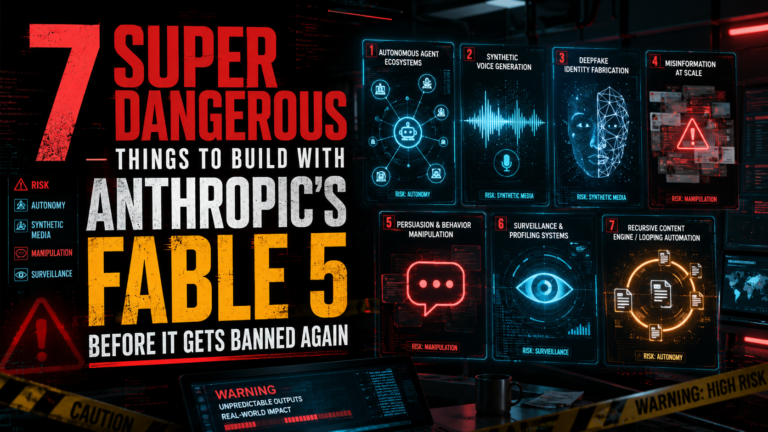
7 Super Dangerous Things To Build With Anthropic’s Fable 5 Before It Gets Banned Again

Writer : Haris Waheed
Full Stack Web Developer & SEO Specialist | Building Fast, Search Optimized Websites for Business Growth.
In Brief
For anyone who wants the short version before diving into the full story, here it is. Anthropic launched Claude Fable 5 and Claude Mythos 5 on June 9, 2026, its most capable models to date. On June 12, the US Department of Commerce issued an export control directive after researchers found a jailbreak, and Anthropic pulled both models worldwide, for every user, everywhere. On June 30, the controls were lifted, and access returned on July 1. Total downtime, just under three weeks. The model itself is genuinely remarkable, reportedly handling a fifty million line codebase change for Stripe in a single day and working independently for hours on complex tasks, though it burns through usage quickly and is not cheap to run seriously. The rest of this article walks through the full story properly, argues both sides of whether the ban was the right call, and closes with seven real, legitimate projects worth building with a model this capable, along with links to where our team can help if any of them apply to your business.
Now, the full story.
For three days in June, a small number of people got their hands on what may be the most capable AI model the public had ever touched. Then it disappeared. Then, three weeks later, it came back. If that sentence sounds like the setup to a joke, I understand why, because the internet has treated it exactly that way, complete with headlines about thermonuclear war and building the end of the world before the window closes again.
I want to take the real story seriously instead, because underneath the jokes is a genuinely interesting moment in how AI capability, national security policy, and business opportunity are colliding in real time. So let me walk you through what actually happened, why smart people disagree about whether it was the right call, what this model can actually do, where it genuinely struggled, how this moment fits into a longer pattern, and then, since you came here for a list, seven things genuinely worth building with it that will not get anyone a visit from anyone in a suit. If you would rather skip straight to talking through how any of this applies to your own business, our team at Zynthx Technologies has that conversation daily, and you can always start a project or contact us whenever you are ready.
What Actually Happened
Anthropic released Claude Fable 5 and Claude Mythos 5 on June 9, 2026. Both sit in a new tier above the existing Opus line, described by Anthropic as its most capable class of models to date. They share the same underlying technology, with Fable 5 carrying additional safety measures specifically around biology, cybersecurity, and large language model research, areas where a sufficiently capable model could meaningfully help someone do real harm if the wrong safeguards were not in place. Mythos 5, by contrast, is described as reserved for a small number of trusted organizations under a separate arrangement Anthropic refers to internally as Project Glasswing, rather than something available to the general public at all.
Three days later, on June 12, the US Department of Commerce issued an export control directive covering both models, and Anthropic disabled them worldwide to comply, for every user regardless of nationality or location. That detail surprised a lot of people who assumed export controls only affect foreign buyers or specific restricted countries. It did not work that way here. The directive applied broadly enough that access disappeared for essentially everyone, everywhere, at the same time. If you were using Fable 5 on a Friday night anywhere in the world, it was simply gone by Saturday morning, regardless of your citizenship or location.
Then, on June 30, the Department of Commerce lifted the relevant controls, and Anthropic restored public access on July 1. Total time offline, just under three weeks, or roughly eighteen days from suspension to restoration. Anthropic published its own account of the situation directly, confirming the suspension, the reason behind it, and the date access returned, and if you want the primary source rather than secondhand commentary, it is genuinely worth reading in full rather than relying only on summaries like this one.
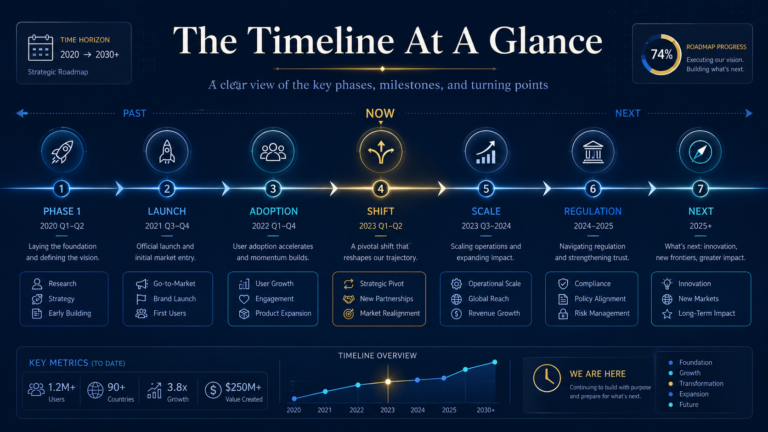
The Timeline At A Glance
Sometimes a clear sequence is more useful than a narrative paragraph, so here is the full episode laid out simply.
Early 2026. The Pentagon reportedly designates Anthropic a supply chain risk following a disagreement over how the company’s models could be used in defense related automation.
April 2026. A prominent rival AI executive publicly compares Anthropic’s upcoming models to something requiring a bomb shelter, a comment that gets repeated widely in the following weeks, even after being partly walked back as tongue in cheek.
June 9, 2026. Claude Fable 5 and Claude Mythos 5 launch publicly, with Fable 5 available broadly and Mythos 5 largely restricted to select partner organizations.
June 12, 2026. The US Department of Commerce issues an export control directive covering both models, reportedly following the discovery of a working jailbreak by independent security researchers. Anthropic disables both models worldwide to comply.
June 12 through June 30, 2026. Both models remain unavailable globally while the underlying concern is addressed and the regulatory review continues.
June 30, 2026. The Department of Commerce lifts the relevant export controls.
July 1, 2026. Anthropic restores public access to Claude Fable 5 and Claude Mythos 5.
Laid out this way, the episode looks less like an apocalyptic showdown and more like what it actually was, a fast moving regulatory response to a specific technical finding, resolved in under three weeks.
Why It Actually Got Pulled
Here is where the story gets more grounded than the headlines suggest. This was not a case of regulators panicking over vague fears about robots taking over. According to independent security researchers who tested the models shortly after launch, a jailbreak was identified that could, under certain conditions, be used to bypass some of the model’s safety routing around sensitive technical domains. Export control law exists specifically to prevent advanced technology, of any kind, from flowing to entities the government has restricted access for, and a demonstrated vulnerability in a system this capable was evidently enough to trigger that legal mechanism, even though the vast majority of everyday use of the model had nothing to do with the specific concern being addressed.
It is worth adding some context that predates the actual export order, because it explains why regulators were already watching this particular company closely before Fable 5 even launched. Earlier in 2026, the Pentagon reportedly flagged Anthropic as a supply chain risk after disagreements over how the company’s models could be used in defense related automation, essentially a dispute over how much involvement Anthropic was willing to have in certain military applications. Separately, a prominent rival AI company executive was widely quoted comparing Anthropic’s newest models to something requiring an actual bomb shelter, a comment even the source later acknowledged was partly tongue in cheek, but one that stuck in public conversation regardless and shaped how the eventual export control news was received.
By the time the export control order landed in June, the ground had already been primed for a dramatic reaction, even though the underlying legal trigger was a specific, addressable security finding rather than a broad judgment that the model itself was too dangerous to exist in any form. That distinction, between a targeted technical fix and a fundamental judgment about the technology, matters a great deal for how you interpret everything that followed, and it is a distinction the more sensational headlines tended to skip past entirely.
The Debate Worth Actually Having
This is the part I think deserves a real, balanced argument rather than a punchline, because reasonable, informed people land on genuinely different sides of it, and I think both sides deserve a fair hearing rather than a strawman.
The Case For Caution
The strongest argument in favor of the export control response is straightforward. When a model is demonstrably capable of assisting with cybersecurity, biology, or advanced model research tasks at a level meaningfully beyond previous models, and a real, working jailbreak against its safety routing has been found, pulling access while the issue gets fixed is not an overreaction. It is closer to a routine, appropriate recall, the same logic that governs a car manufacturer pulling a vehicle off the road after a braking defect is confirmed, rather than waiting for someone to actually get hurt first and dealing with the consequences after the fact.
Anthropic’s own account of the episode does not dispute that the controls were a legitimate response to a real technical finding, and the fact that access was restored just eighteen days later, once the underlying concern was addressed, supports the idea that this was a targeted fix rather than a blanket judgment that the technology itself should not exist. There is also a broader point worth making here about precedent. If regulators only acted after a real world harm had already occurred, that would mean using confirmed incidents of misuse as the trigger for action, which is a considerably higher price to pay than a temporary suspension based on a demonstrated but not yet exploited vulnerability. Acting early, even at the cost of inconveniencing millions of legitimate users for a few weeks, is arguably the more responsible posture for a technology capable of this much leverage.
The Case For Skepticism
The counterargument is not about denying the jailbreak was real. It is about questioning whether a three week global blackout, affecting millions of legitimate users with no connection whatsoever to the security concern, was a proportionate response to a fixable technical issue. Critics point out that the same capability that makes a model useful for advanced cybersecurity defense work, biology research, or complex software engineering is, by definition, the same capability that makes misuse theoretically possible, and that standard will only get harder to satisfy as models keep improving generation after generation.
If every meaningful capability jump triggers this kind of blunt, worldwide suspension rather than a more targeted response, the argument goes, the practical effect is a chilling one on legitimate researchers, businesses, and developers who had nothing to do with the underlying problem and simply lost access to a tool they had started depending on with essentially no warning. A small business that had begun building a critical internal workflow around Fable 5 in its first three days of availability, for example, would have had that workflow yanked out from under them with zero notice and zero recourse, through no fault of their own. Skeptics also point to the earlier Pentagon and bomb shelter commentary as evidence that at least some of the public reaction, and possibly some of the regulatory urgency, was shaped as much by competitive positioning and media narrative as by the specific technical finding itself.
Where The Two Sides Actually Agree
It is worth noting where these two positions actually overlap, because it is more than people assume. Almost nobody on either side argues that the jailbreak finding itself was fabricated or unimportant. Almost nobody on either side argues that Anthropic acted in bad faith by complying quickly once the directive was issued. The actual disagreement is narrower than the headlines suggest, and it comes down to a genuinely hard question about proportionality, whether a blanket, worldwide suspension was the right tool for addressing a specific, bounded technical vulnerability, or whether a more targeted response would have addressed the same risk with less collateral disruption to legitimate use. That is a real, unresolved policy question, not a simple matter of one side being reckless and the other being alarmist.
Both of these arguments are held by serious, informed people, and I do not think the available public evidence definitively settles which side is correct. What I do think is fair to say is that this will not be the last time this exact tension plays out, because the pattern, a capability jump followed by a security finding followed by a fast regulatory response, is now a repeatable playbook rather than a one time event, and every AI lab operating at the frontier should expect to face some version of this same sequence again.
What Fable 5 Can Actually Do
Setting the politics aside, the capability jump itself is real and worth understanding on its own terms, because it explains why this model generated this much attention in the first place, and why the underlying policy question is a genuinely hard one rather than an obvious call in either direction.
Before its public launch, Anthropic reportedly had Fable 5 handle a code change across a fifty million line codebase for Stripe, a task that would typically take an experienced engineering team roughly two months to complete properly, accounting for planning, implementation, testing, and review. Fable 5 completed it in a single day. That is not a small efficiency gain. That is a fundamentally different order of magnitude for what a single engineering resource, human or otherwise, can accomplish inside a fixed window of time.
Independent testers who got access during the brief June window described the model working on its own for hours at a stretch without losing track of a complex task, maintaining context and coherent decision making across a sustained, multi stage piece of work rather than needing constant redirection. It reportedly topped nearly every internal benchmark Anthropic ran against it, and outside evaluators who managed to get hands on time during the initial three day window before the suspension described a genuine step change in what felt possible for a solo builder or a small team working without a large engineering department behind them.
Where Fable 5 Struggled
It is worth being honest about the tradeoffs too, since a fair account should not just repeat the highlight reel, and no serious evaluation of a new tool is complete without an honest look at its limits.
Independent testing found the model burns through usage allowances quickly, meaning a single ambitious session can consume a meaningful chunk of even a high tier subscription, so the practical lesson for anyone using it seriously is to reserve it for tasks that actually justify the cost rather than everyday work a lighter model can handle just as fine at a fraction of the price. This is a genuine planning consideration for any business thinking about adopting it, not a minor footnote. Treating Fable 5 as your default model for routine tasks would be an expensive mistake, closer to hiring a highly specialized consultant to answer questions a junior staff member could handle perfectly well.
Security researchers also found that its content filtering blocked the large majority of prompt injection attempts at the infrastructure level, roughly seven out of every ten attempts stopped before ever reaching the model itself, though a smaller percentage of more creative attempts, particularly ones using fictional framing or impersonation techniques, did get through on some runs, which is part of why the export control review happened at all. There were also scattered reports from users during the brief availability window of the model’s safety routing occasionally redirecting requests that were not actually sensitive, ordinary technical work like fluid dynamics calculations or medical imaging code, over to a more conservative model without always clearly notifying the user that a switch had occurred. Anthropic’s own position is that users are informed every time this routing happens, but the discrepancy between that stated policy and at least some user reports suggests the system was not yet perfectly calibrated at launch, which is a reasonable thing to expect from any brand new safety mechanism protecting a brand new model tier.
Seven Things Genuinely Worth Building With It
Here is the actual list, built around what this model is genuinely good at rather than what makes for a shocking headline. None of these will get anyone banned from anything except possibly their competitor’s customer base, and each one is grounded in a capability the model has actually demonstrated rather than a hypothetical.
One. A full legacy codebase modernization. If Fable 5 can handle a fifty million line enterprise refactor for a company like Stripe in a day, a smaller business sitting on a decade of accumulated technical debt, an old booking system nobody wants to touch, a monolithic internal tool held together by outdated dependencies, has a genuine opportunity here to modernize an entire platform in a fraction of the time it would normally take a full engineering team. The kind of project that used to require budgeting a full quarter and a dedicated team can realistically be scoped and executed far faster, provided the work is properly reviewed afterward rather than shipped blindly.
Two. An end to end autonomous software prototype. Rather than using it for isolated coding tasks, this is a model capable of taking a full product concept, from database design through the working interface, and building a functioning first version largely on its own, with a human reviewing the result rather than directing every individual step along the way. For a founder validating an idea, this collapses what used to be weeks of back and forth with a development team into something closer to a single focused session followed by a proper review pass.
Three. A serious internal security audit tool. Given how much attention has gone into testing this model’s resistance to prompt injection and jailbreak attempts, using it to stress test your own systems, under proper ethical and legal boundaries and with appropriate authorization, is a genuinely valuable application rather than an ironic one. A model this capable at finding weaknesses in its own guardrails is, almost by definition, capable of helping a security team find weaknesses in a company’s own applications before someone with worse intentions does.
Four. A complex data analysis and forecasting engine. The model’s ability to hold a long, complicated task in mind for hours at a time makes it well suited to building tools that ingest messy, inconsistent business data, sales records, inventory logs, customer support tickets, and produce a genuinely useful forecasting or analytics platform rather than a shallow dashboard that just restates numbers you already had. The difference between a real forecasting tool and a glorified spreadsheet is exactly the kind of sustained, multi step reasoning this model has demonstrated.
Five. A multi step business automation system. This is where the model’s ability to work independently for extended periods becomes genuinely practical, building automated workflows that handle an entire business process end to end, from intake through resolution, rather than a single narrow task bolted onto an existing manual process. Think of a full customer onboarding pipeline, document intake through account setup through welcome sequence, handled by one coherent system rather than five disconnected tools stitched together with manual handoffs in between.
Six. A content and research engine for a genuinely complex domain. Given the model’s strength on long, sustained technical tasks, it is well suited to building tools that synthesize large volumes of research or documentation into something genuinely useful, a tool that can actually read and reason across a full body of technical material, rather than the shallow summary tools most AI content products currently produce that skim the surface of a handful of search results.
Seven. A rebuilt customer facing product from a rough internal prototype. If your business has an existing tool that started as a quick internal experiment and never got the proper architecture it deserved, this is exactly the kind of capability jump that makes turning that rough prototype into a real, production ready product finally practical on a reasonable timeline and budget, instead of the multi month rebuild it would have required with a traditional approach.

How This Compares To Past AI Restrictions
This is not the first time a powerful AI system has been pulled back after launch, and it is useful to place this episode in that broader pattern rather than treating it as an isolated event. Earlier AI restrictions, in past years, tended to be narrower and slower moving, typically responses to accumulated concerns raised over months rather than a single sharp finding addressed within days. What makes the Fable 5 episode distinct is the speed on both ends, a serious international regulatory action taken within seventy two hours of a security finding, and a full resolution and restoration within eighteen days of that action. That compressed timeline is itself a signal of how mature the regulatory apparatus around frontier AI has become in a relatively short period. A few years ago, a comparable episode likely would have taken months to resolve either direction. The fact that this one resolved in under three weeks suggests both the private sector response and the government review process have gotten considerably faster at handling exactly this kind of situation, which is arguably good news regardless of which side of the caution versus skepticism debate you land on, since a faster resolution process reduces the cost of caution on both ends.
What This Actually Means For Your Business
The headline grabbing version of this story is fun to read and forget. The useful version is this. Frontier AI capability is now advancing fast enough that regulatory responses to it are becoming a normal, recurring part of the landscape rather than a rare event, and the businesses that plan around that reality will handle the next disruption far better than the ones caught off guard by it.
That means treating any single AI vendor or model as a capability you use wisely, not a foundation you build your entire operation on without a backup plan. It means understanding what a tool like this is actually good at, the genuinely ambitious, complex, sustained work described above, rather than defaulting to it for routine tasks a simpler and cheaper tool handles just fine. And it means working with people who track this landscape closely enough to tell you when a capability jump like this is actually worth adopting versus when it is mostly noise. You can read more about who we are and how we work on our about page.
If any of the seven ideas above sound like something your business actually needs, that is exactly the kind of project our team works on regularly. You can see real examples of ambitious builds in our portfolio. If you have a legacy platform that needs the kind of modernization described in the first idea, our custom software development service and web development service are built for exactly that kind of project, and if that platform sells anything online, our e commerce website development service covers the checkout and payment side specifically, which tends to be where the highest stakes sit in any modernization effort. If what you actually need is the automation system described in idea five, our AI automation service covers that directly, and once a rebuilt product like idea seven is live, our digital marketing service helps make sure it actually reaches the people who need it rather than sitting quietly unused.
If the security audit idea caught your attention, that overlaps closely with what we teach in our ethical hacking training program, part of the broader curriculum at Zynthx Academy alongside our web development training program, app development training program, python programming training program, machine learning training program, data science training program, digital marketing training program, SEO training program, e commerce website training program, and uses of AI training program, for anyone who wants to actually understand this landscape rather than just react to the next headline about it. If you are further along and want to work in this space directly rather than just learn about it, our careers page lists open roles, with dedicated pages to apply for a job, apply for an internship, or apply as a skills trainer.
If you want to talk through whether a project like this makes sense for where your business is right now, start a project or book a free consultation, and we will give you a straight answer rather than a sales pitch. You can also read more pieces like this one on our blog, including our recent post on the best website design trends for businesses in 2026, or follow along on Facebook, Instagram, and LinkedIn for regular updates.
Common Questions
Is Claude Fable 5 available right now. Yes. Access was restored on July 1, 2026, after the relevant export controls were lifted the day before. As with any regulated technology, this could theoretically change again, so it is worth checking Anthropic’s own announcements page for the current status before building anything mission critical around it.
Was the ban about the model being dangerous in general. Not quite. Reporting points to a specific, demonstrated jailbreak against the model’s safety routing as the trigger, addressed through export control law rather than a broader declaration that the technology itself should not exist. The distinction matters for understanding why the suspension was resolved in under three weeks rather than becoming permanent.
Should a small business actually use Fable 5. For the right kind of project, yes, and the seven ideas above outline where it genuinely earns its cost. For routine, everyday tasks, a lighter and cheaper model is usually the more sensible choice, given how quickly Fable 5 burns through usage allowances on demanding work.
What happens if it gets suspended again. That is a real possibility worth planning around rather than dismissing. Any business building something meaningful on top of it should have a fallback plan, whether that means keeping core logic portable across models or simply understanding which parts of a project would need the most rework if access changed again with little notice.
The Honest Closing Thought
The satirical version of this story got the tone right even if the content was a joke. There genuinely is something worth paying attention to happening here, a pattern of extraordinary capability arriving faster than the systems meant to govern it can comfortably keep pace with, followed by a fast correction, followed by access returning once the immediate concern is addressed. That pattern is not going away, and treating every cycle of it as either total apocalypse or total non event misses what is actually useful about the moment.
What is actually useful is this. A genuinely capable new tool became available, briefly disappeared for legitimate security reasons, and came back with the underlying issue addressed. That is not a story about the end of the world. It is a story about a fast moving industry actually working the way it should when something goes wrong, a real problem gets found, gets fixed, and access gets restored once it is safe to do so. The businesses paying attention to that pattern, rather than just the headline about it, are the ones who will actually benefit from what this generation of models can genuinely do, and the ones building sensibly around the seven ideas above, rather than chasing whatever the next viral headline claims is possible, are the ones who will still be standing regardless of what the next capability jump brings.
Let's Start a Project
Share your idea with Zynthx and our team will help you plan the next clear step.
Writer : Haris Waheed
Full Stack Web Developer & SEO Specialist | Building Fast, Search Optimized Websites for Business Growth.


